
Henry County Blotter Sources
The Henry County Sheriff's Office posts no online blotter on the county site. What fills the gap? Multi-day coverage comes from news reports plus later official records. Regional Media ran a dated arrest-and-citation report from the sheriff's office. Kewanee Voice publishes city police blotters in daily and weekend form. Both are solid reporting sources. Neither is the jail's live database.
The Regional Media report blends sheriff arrests with citations. Enforcement calls come from Kewanee, Cambridge, and Colona. Kewanee Voice entries often name a warrant or alleged offense. Transport to Henry County Jail gets noted too. Not every agency, arrest, or date makes the cut into print.
Start with the headline, the date line, and the entry itself. For a full report, go to the originating agency, and check with Henry County Jail for current custody.
Read Henry County Arrest Reports
Read any blotter backward from its source and reporting span. First, figure out what you hold. A sheriff report, a city-police summary, and a third-party index each carry different weight. From there, separate arrests from citations and calls. Weigh any alleged charge against later court information when the legal outcome matters.
- Define the reporting window. Write down every date named in the headline or article instead of assuming a fixed weekly archive.
- Identify the agency. Henry County Sheriff, Kewanee Police, Geneseo Police, and state officers create different source records.
- Classify the event. Mark an arrest, citation, service call, warrant reference, or transport as the report labels it.
- Check custody separately. A note that someone was taken to Henry County Jail does not prove the person remains there.
- Follow the case. Use the Circuit Clerk’s route and Judici for later filings or disposition.
For a truly fresh event, skip the compiled report. Use the Arrests Last 24 Hours workflow, which starts with direct jail confirmation of who is in custody now.
Henry County Blotter Entry Fields
The Regional Media sample offers the best countywide pattern. It lists more than arrests, so give each field context. Kewanee Voice entries run as prose and typically state the day, the police response, an alleged offense or warrant, and whether the person went to the county jail. Neither source guarantees a mugshot field.
| Reported element | Meaning and limit |
|---|---|
| Date and time | The event or response time stated by the report, not necessarily the jail booking time. |
| Department | The agency tied to the response and likely custodian of the incident record. |
| Location | Where activity was reported; it does not prove residence or guilt. |
| Event type | An arrest, citation, traffic stop, call, warrant event, or other response. |
| Name, sex, and age | Identifiers the sample may include; readers should guard against mistaken identity. |
| Disposition or response | What officers did at that stage, not the final court disposition. |
| Closing remarks | Extra report detail that remains subject to correction and later legal change. |
| Photograph | No stable photo archive or routine image field was established by the accessible local samples. |
Words matter. "Cited" does not mean "booked," and "transported" signals a custody move. A warrant reference says nothing about how that warrant resolved later, so read only what the source states.
Henry County Weekend Blotters
The Kewanee Voice weekend blotter shows how one local report can bundle several dates together. Entries are text-first and may carry arrest or warrant language along with transport to Henry County Jail. No countywide schedule exists. It tracks Kewanee police, not every county agency.
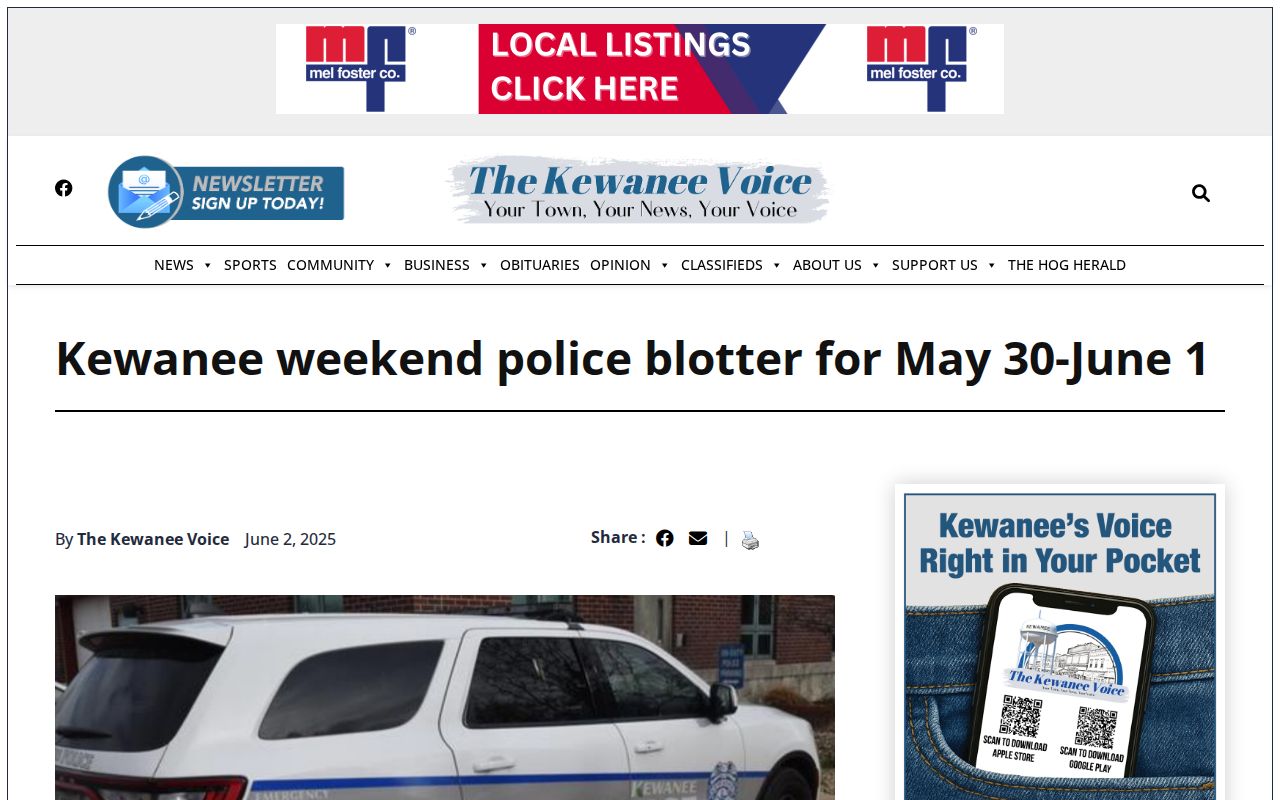
The weekend blotter page is a news example, not an official booking database. Its stated weekend span controls how the entries should be read. The daily Kewanee police blotter example takes a narrower format. Daily reporting still arrives after the fact. It can also omit activity that was never supplied, selected, or published. Star Courier covers the Kewanee area too. It offers no stable Henry County mugshot gallery, though. There is no full arrest archive either.
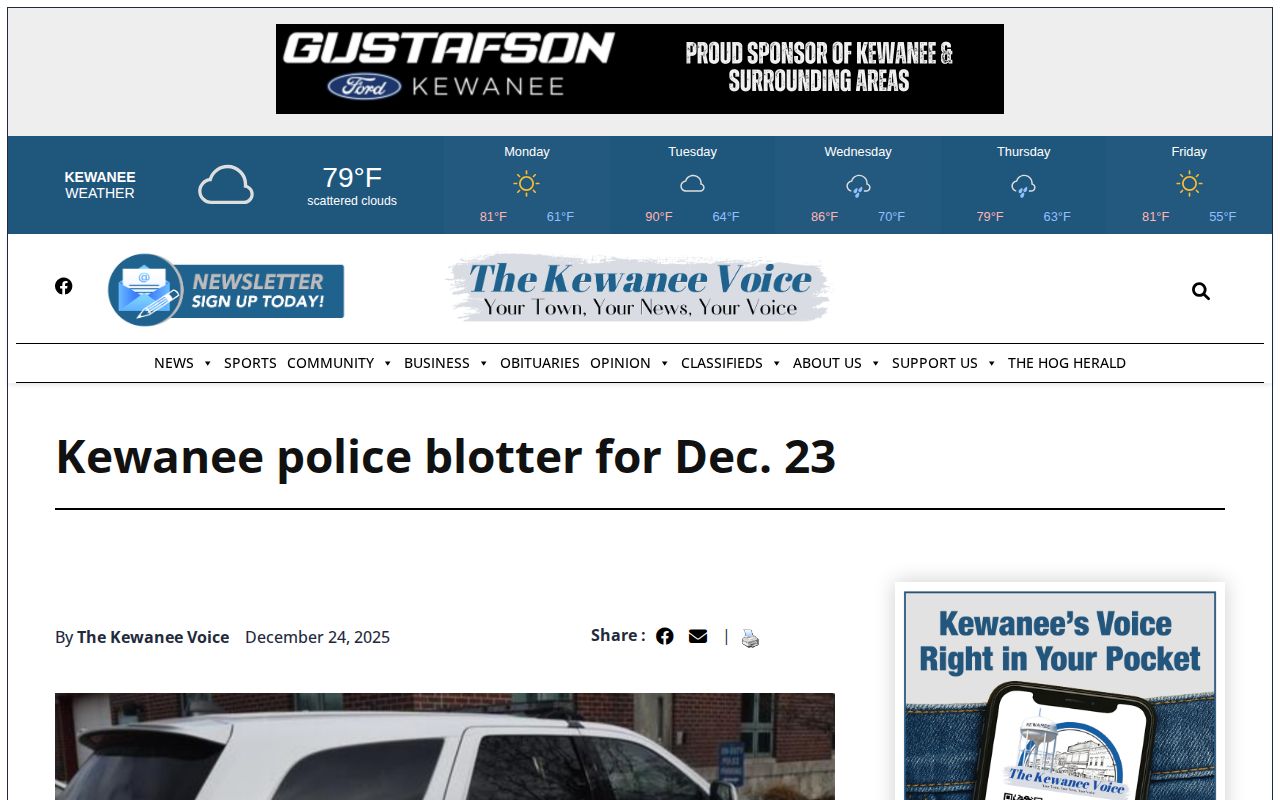
The second example makes it plain. Dated news ranks second. It cannot replace agency records or the jail's own live custody confirmation.
Note: Weekend labels describe an outlet's reporting package, not a formal Henry County Jail data window or a guaranteed holiday publication schedule.
Arrest, Citation, and Response
The Regional Media sample mixes arrests with traffic citations, locations, department details, and response fields. That blend gives a broad view of enforcement. It also invites mistakes. A citation can go out without any jail booking. A response can close with no arrest. An officer's on-scene handling of an event is not the same thing as a court disposition.
- Arrest
- A law-enforcement restraint based on alleged conduct; it is not a conviction.
- Booking
- The jail intake and identification process after acceptance by a detention facility.
- Citation
- A notice directing a person to address an alleged violation, sometimes without custodial booking.
- Court disposition
- The later legal result, such as dismissal, plea, acquittal, or conviction.
When the category is unclear, request the original report. A name alone in an enforcement roundup never proves a booking.
Henry County Court Records Differ
Henry County divides these records. Custody, sheriff records, and court records sit with separate offices. The Circuit Clerk Records Search page points criminal and traffic searches to Judici. Email and fax paths work too. The clerk's fee schedule sets $6 per person for a record search. That's a court fee, though. Viewing a public police blotter costs nothing.
The Circuit Clerk page lists the Cambridge office at 307 W Center St. A Kewanee Division sits at 401 E Third St. Kewanee handles traffic, ordinance, and conservation matters on Fridays. These local splits explain why a blotter entry and a court entry can land in different systems at different times.
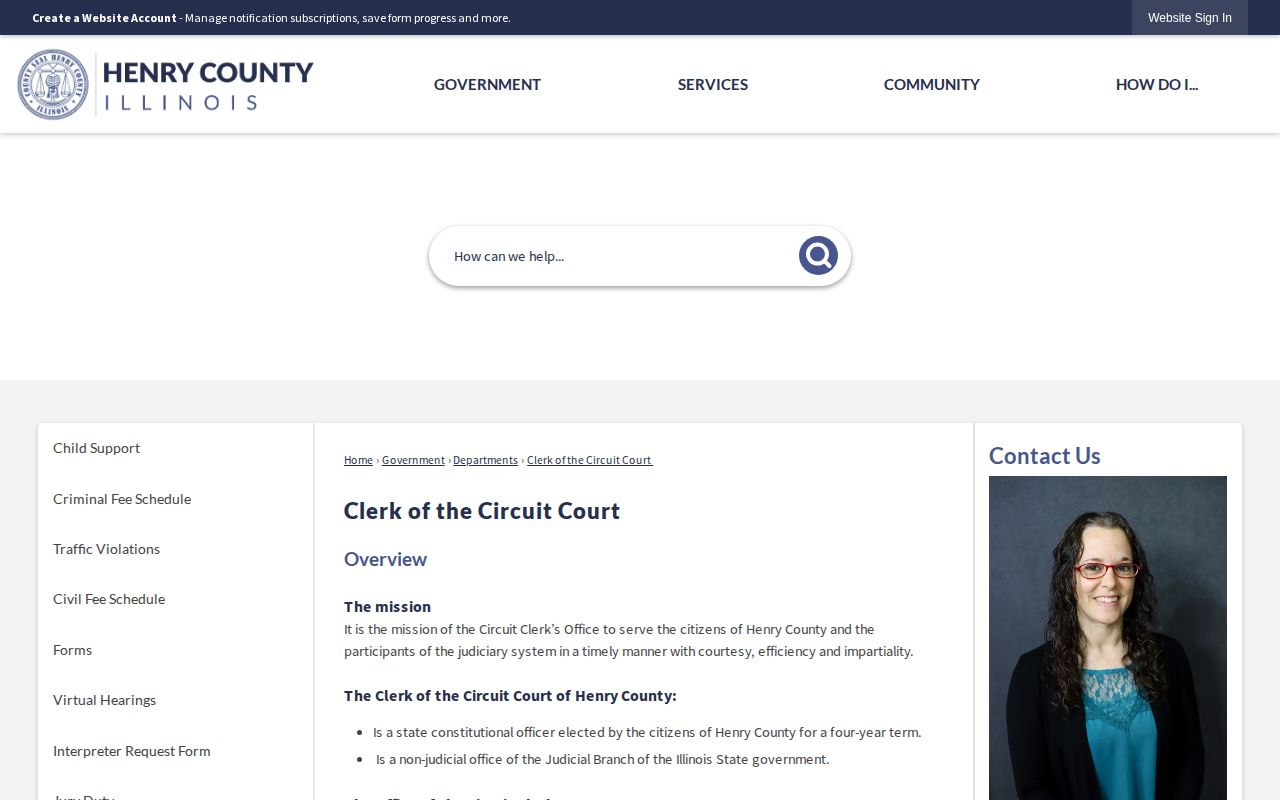
The clerk's page marks the right court custodian. It is not a jail-status tool. Booking photos do not live there. Use the docket to trace later filings, bond orders, hearings, dismissals, pleas, trials, or sentences. A prosecutor can file a different charge than the blotter suggested, or none at all.
Henry County Arrest Trend Limits
The Sheriff's Records Section feeds its reports into a database for retrieval and analysis. That database also keeps the county in line with UCR and NIBRS reporting standards. Those two systems are simply the standardized way American agencies count crime. That work happens internally, though. Henry County publishes no monthly booking total. There is no live arrest trend dashboard either. Anyone hoping to chart recent arrests over time is out of luck on the county side.
Counting names in local news stories will not fill that gap. Weekend grouping and duplicate mentions can skew the total. Traffic citations and days with no coverage at all skew it badly too. Blotters are good for understanding single reported events during their named periods. For real trend claims, wait for official statistical releases. Neighboring-city outlets add context. Still, a category of nearby coverage is not a selected-city arrest feed. It cannot carry a countywide count by itself.
Henry County Blotter Archives
Henry County posts no official web blotter. That means no county page sets a seven-, thirty-, or ninety-day window for it. Each news outlet keeps its own archive and its own access rules. When a particular arrest entry matters to you, save the article URL and the headline. Also record the date span and the publication date. A story that vanishes from a site does not mean the source record changed.
For older sheriff material, go through the county FOIA route or the Records Section at 309-937-3616. Name the agency and the record type. Add any known names and the date range. Include a report number if you have one. Illinois law bars local agencies from simply discarding records outside the applicable records-commission process. Even so, the county lists no current retention schedule for booking files. Ask the custodian what still exists.
Much older material may appear in the Illinois Regional Archives Depository holdings search. IRAD can hold old court and sheriff records. It is not a recent arrest locator, though. Its historical register fields say nothing about what a present-day file contains.
Note: A news archive, an agency record file, and an archival register are three separate layers with separate access rules.
Verify Henry County Blotter Claims
Start with official sources. The police or sheriff report tells you what officers recorded. The jail shows who is in current county custody, and the court docket shows the legal result. News outlets offer useful dated summaries of Henry County arrests. Third-party indexes mainly help you find the originating source.
Illinois Official Records and Black Book Online can surface police-report links. Neither one replaces Henry County or the arresting agency itself. The big mugshot aggregators carry no verified Henry County, Illinois section. Be careful about look-alike counties, too. A Henry County page from Ohio or Missouri is the wrong jurisdiction. No gallery counts as the official blotter.
Charges in a report can change. A report can also hold an error or point to someone with a similar name. Check identity carefully. Preserve any corrections you find. Before repeating a claim, go back to the agency that created the record.